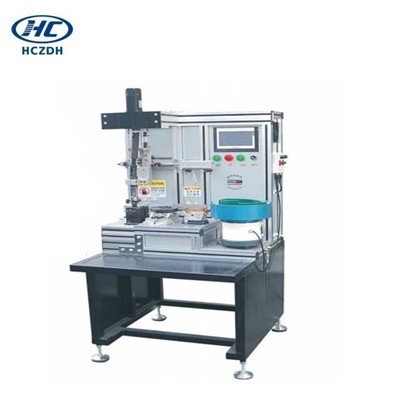
As a well - established CNC machine supplier, I've witnessed firsthand the crucial role that servo motors play in the world of CNC machines. In this blog, I'll delve into the various aspects of servo motors and their significance in CNC machining.


Understanding Servo Motors
Servo motors are a type of electric motor that can precisely control angular position, velocity, and acceleration. They are designed to receive a control signal that determines the desired output, and they then adjust their operation to achieve that output as accurately as possible. Unlike regular motors, which simply spin at a set speed, servo motors can change their speed, direction, and position in real - time based on the input they receive.
A typical servo motor system consists of a motor, a controller, and a feedback device. The controller sends a signal to the motor, specifying the desired position or speed. The feedback device, often an encoder, continuously monitors the actual position or speed of the motor and sends this information back to the controller. The controller then compares the actual and desired values and makes adjustments to the motor's operation to minimize the error.
The Role of Servo Motors in CNC Machines
Precision Motion Control
One of the most important roles of servo motors in CNC machines is to provide precise motion control. CNC machines are used for a wide range of applications, from simple drilling and cutting to complex 3D machining. In all these applications, accuracy is paramount. Servo motors can move the machine's axes with extremely high precision, often to within a few micrometers.
For example, in a CNC Lathe Machines, the servo motors control the movement of the cutting tool along the X and Z axes. This allows for the creation of precise cylindrical shapes, threads, and other complex geometries. The ability to control the movement of the tool with such accuracy ensures that the finished parts meet the required specifications.
High - Speed Operation
CNC machines are often required to operate at high speeds to increase productivity. Servo motors are capable of achieving high rotational speeds and rapid acceleration and deceleration. This enables the machine to quickly move from one position to another, reducing the overall machining time.
In a CNC Milling Machines, for instance, the servo motors drive the spindle and the axes. The high - speed operation of the servo motors allows the milling cutter to remove material at a fast rate, while still maintaining the required precision. This is particularly important in industries where large quantities of parts need to be produced in a short period of time.
Torque Control
Servo motors can also provide precise torque control. Torque is the rotational force that a motor can produce, and it is crucial for many CNC machining operations. For example, when cutting through hard materials, the servo motor needs to provide enough torque to drive the cutting tool through the material without stalling.
In a Brass Valve CNC Lathe, the servo motor on the spindle must be able to generate sufficient torque to turn the brass workpiece at the appropriate speed while the cutting tool is removing material. By precisely controlling the torque, the servo motor ensures that the machining process is efficient and that the quality of the finished part is high.
Synchronization
In multi - axis CNC machines, it is essential that the movement of all the axes is synchronized. Servo motors can be easily synchronized to work together, allowing for complex machining operations. For example, in a 5 - axis CNC machine, the servo motors on each of the five axes need to move in a coordinated manner to create complex 3D shapes.
The synchronization of servo motors is achieved through the use of advanced control algorithms. The controller sends signals to each servo motor, specifying the desired position and speed, and ensures that all the motors move in harmony. This enables the CNC machine to perform complex tasks that would be impossible with a single - axis or non - synchronized system.
Advantages of Using Servo Motors in CNC Machines
Improved Quality
The precise motion control and torque control provided by servo motors result in improved quality of the machined parts. The parts are more accurate, have better surface finishes, and are less likely to have defects. This is crucial for industries such as aerospace, automotive, and medical, where the quality of the parts can have a significant impact on the safety and performance of the final product.
Increased Productivity
As mentioned earlier, the high - speed operation and rapid acceleration and deceleration of servo motors allow for faster machining times. This means that more parts can be produced in a given period of time, increasing the overall productivity of the CNC machine. Additionally, the ability to synchronize multiple axes enables the machine to perform complex operations in a single setup, further reducing the production time.
Flexibility
Servo motors offer a high degree of flexibility in CNC machining. They can be easily programmed to perform different operations, and the control parameters can be adjusted to suit the specific requirements of each job. This allows CNC machines to be used for a wide variety of applications, from small - batch production to large - scale manufacturing.
Challenges and Considerations
Cost
One of the main challenges of using servo motors in CNC machines is the cost. Servo motors and their associated controllers are generally more expensive than regular motors. However, the benefits in terms of precision, productivity, and quality often outweigh the higher cost. When considering the purchase of a CNC machine, it is important to factor in the long - term savings and benefits that servo motors can provide.
Maintenance
Servo motors require regular maintenance to ensure their proper operation. The feedback devices, such as encoders, need to be calibrated periodically, and the motors themselves need to be inspected for wear and tear. Additionally, the controllers need to be updated with the latest software to ensure optimal performance. As a CNC machine supplier, we provide comprehensive maintenance and support services to our customers to help them keep their machines running smoothly.
Conclusion
In conclusion, servo motors play a vital role in CNC machines. They provide precise motion control, high - speed operation, torque control, and synchronization, which are essential for achieving high - quality, efficient, and flexible machining. While there are some challenges associated with using servo motors, such as cost and maintenance, the benefits they offer make them an indispensable component of modern CNC machines.
If you're in the market for a CNC machine and want to learn more about how servo motors can enhance your machining operations, we'd love to hear from you. Contact us to start a discussion about your specific requirements and how our range of CNC machines can meet your needs. Let's work together to take your manufacturing processes to the next level.
References
- "CNC Machining Handbook"
- "Servo Motor Technology and Applications"
- Industry whitepapers on CNC machine design and operation