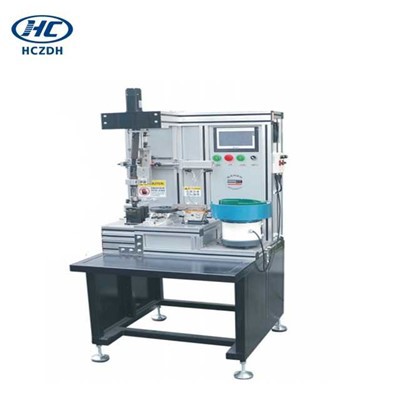
As a supplier of CNC machines, I've had the privilege of witnessing the remarkable capabilities these machines offer across various industries. CNC machines have revolutionized manufacturing, providing precision, efficiency, and repeatability that were once unimaginable. However, like any technology, they come with their own set of limitations. In this blog post, I'll delve into some of the key limitations of CNC machines to provide a comprehensive understanding for both current and potential users.
High Initial Investment
One of the most significant barriers to adopting CNC machines is the high initial investment required. These machines are complex pieces of equipment that incorporate advanced technology, precision components, and sophisticated control systems. The cost of purchasing a CNC machine can range from tens of thousands to hundreds of thousands of dollars, depending on the size, capabilities, and features of the machine.
In addition to the purchase price, there are also significant costs associated with installation, training, and maintenance. Installing a CNC machine requires specialized knowledge and expertise to ensure that it is properly aligned, calibrated, and integrated into the existing manufacturing environment. Training operators to use the machine effectively can also be time-consuming and expensive, as they need to learn how to program, operate, and troubleshoot the machine.
Maintenance is another ongoing cost that needs to be considered. CNC machines require regular maintenance to ensure optimal performance and reliability. This includes tasks such as lubrication, cleaning, inspection, and replacement of worn parts. Failure to perform regular maintenance can lead to decreased productivity, increased downtime, and costly repairs.
Despite the high initial investment, the long-term benefits of using CNC machines often outweigh the costs. These machines can significantly improve productivity, quality, and efficiency, which can lead to increased profitability and competitiveness in the market. However, for small and medium-sized enterprises (SMEs) with limited budgets, the high initial investment can be a major deterrent.
Limited Flexibility
While CNC machines are highly precise and efficient, they are also relatively inflexible compared to manual machines. Once a CNC machine is programmed to perform a specific task, it is designed to repeat that task with a high degree of accuracy. This makes them ideal for mass production of identical parts.
However, if there is a need to change the design or specifications of the part, the CNC machine needs to be reprogrammed. This can be a time-consuming and complex process, especially for complex parts or parts with tight tolerances. In addition, reprogramming the machine may require specialized knowledge and expertise, which may not be available in-house.
Another limitation of CNC machines is their limited ability to handle non-standard or irregularly shaped parts. These machines are typically designed to work with standard shapes and sizes, and may not be able to accommodate parts that deviate from these specifications. This can be a significant limitation in industries where there is a high demand for custom-made or unique parts.
To overcome these limitations, some CNC machines are equipped with advanced features such as automatic tool changers, multi-axis capabilities, and adaptive control systems. These features can increase the flexibility of the machine and allow it to handle a wider range of parts and tasks. However, these features also come at a higher cost, which may not be feasible for all users.
Programming Complexity
Programming a CNC machine is a complex and specialized skill that requires a thorough understanding of the machine's capabilities, programming languages, and machining processes. CNC machines use a variety of programming languages, such as G-code and M-code, to control the movement of the machine and the operation of the cutting tools.
Learning these programming languages can be challenging, especially for those with no prior experience in programming or machining. In addition, programming a CNC machine requires a high level of attention to detail and accuracy, as even a small error in the program can lead to significant problems, such as tool breakage, part rejection, or machine damage.
To simplify the programming process, some CNC machines are equipped with user-friendly programming interfaces and software. These interfaces allow operators to create and edit programs using graphical icons and menus, rather than having to write code manually. However, these interfaces may still require some level of training and experience to use effectively.
Another option for simplifying the programming process is to use computer-aided manufacturing (CAM) software. CAM software allows users to create 3D models of the part and generate the CNC program automatically based on the model. This can significantly reduce the time and effort required to program the machine, especially for complex parts. However, CAM software can be expensive, and may require additional training and expertise to use effectively.
Maintenance and Repair Challenges
CNC machines are complex pieces of equipment that require regular maintenance and repair to ensure optimal performance and reliability. However, maintaining and repairing these machines can be challenging, especially for users with limited technical knowledge and expertise.
One of the main challenges of maintaining and repairing CNC machines is the complexity of the machine's components and systems. These machines incorporate advanced technology, such as servo motors, linear guides, and ball screws, which require specialized knowledge and tools to maintain and repair. In addition, the control systems of CNC machines are often proprietary and may require specialized software and diagnostic tools to troubleshoot and repair.
Another challenge is the availability of spare parts. CNC machines are often made by different manufacturers, and the availability of spare parts can vary depending on the manufacturer and the model of the machine. In some cases, spare parts may need to be ordered from the manufacturer, which can lead to long lead times and increased downtime.
To overcome these challenges, it is important to have a comprehensive maintenance and repair plan in place. This plan should include regular maintenance tasks, such as lubrication, cleaning, inspection, and calibration, as well as a schedule for preventive maintenance and replacement of worn parts. In addition, it is important to have a trained and experienced maintenance team or to partner with a reliable maintenance service provider.
Environmental Impact
CNC machines can have a significant environmental impact, especially during the manufacturing process. These machines consume a large amount of energy, which contributes to greenhouse gas emissions and climate change. In addition, the cutting fluids and lubricants used in CNC machines can be harmful to the environment if not properly disposed of.
To reduce the environmental impact of CNC machines, manufacturers are increasingly adopting sustainable manufacturing practices. This includes using energy-efficient motors and control systems, reducing the use of cutting fluids and lubricants, and recycling and reusing materials. In addition, some manufacturers are developing new technologies and processes that are more environmentally friendly, such as dry machining and minimum quantity lubrication (MQL).


As a CNC machine supplier, we are committed to promoting sustainable manufacturing practices and providing our customers with energy-efficient and environmentally friendly machines. We offer a range of CNC Machining Centre that are designed to minimize energy consumption and reduce the environmental impact. Our Brass Valve CNC Lathe and High Productivity CNC Machine are also equipped with advanced features that help to improve efficiency and reduce waste.
Conclusion
In conclusion, while CNC machines offer many benefits, they also come with their own set of limitations. These limitations include high initial investment, limited flexibility, programming complexity, maintenance and repair challenges, and environmental impact. However, with proper planning, training, and maintenance, these limitations can be overcome, and the benefits of using CNC machines can be fully realized.
As a supplier of CNC machines, we understand the challenges that our customers face and are committed to providing them with the support and solutions they need to succeed. If you are considering investing in a CNC machine or have any questions about the limitations of these machines, please do not hesitate to contact us. We would be happy to discuss your specific needs and requirements and help you find the right machine for your business.
References
- Smith, J. (2020). CNC Machining: Principles and Applications. New York: McGraw-Hill.
- Jones, A. (2019). The Future of CNC Machining. London: Elsevier.
- Brown, C. (2018). Sustainable Manufacturing Practices in the CNC Industry. Berlin: Springer.