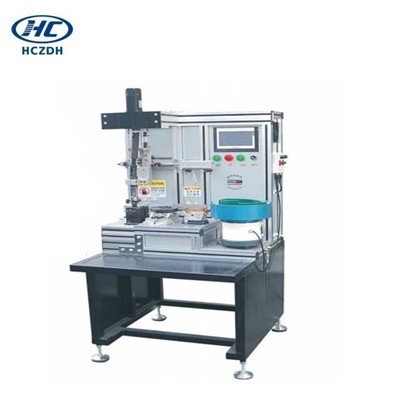
Hey there! As a supplier of CNC machines, I often get asked, "Can a CNC machine produce complex shapes?" Well, let me tell you, the answer is a resounding yes! In this blog post, I'm gonna break down how CNC machines can handle those intricate designs and why they're a game - changer in the manufacturing world.


First off, let's talk about what a CNC machine is. CNC stands for Computer Numerical Control. These machines are essentially automated tools that are controlled by a computer program. Instead of a human operator manually guiding the tool to cut or shape a material, the CNC machine follows a set of pre - programmed instructions. This level of automation brings a whole new level of precision and repeatability to the manufacturing process.
One of the key features that allows CNC machines to produce complex shapes is their multi - axis capabilities. Most basic CNC machines operate on three axes: X, Y, and Z. The X - axis moves left and right, the Y - axis moves forward and backward, and the Z - axis moves up and down. With these three axes, a CNC machine can create many simple to moderately complex shapes.
But here's where it gets really cool. There are also 4 - axis and 5 - axis CNC machines. A 4 - axis machine adds a rotational axis, usually around the X - axis. This allows the machine to create shapes that have a circular or helical element. For example, you could create a screw thread or a complex spiral shape.
A 5 - axis CNC machine takes it even further. It has two rotational axes in addition to the three linear axes. This gives the machine an incredible amount of flexibility. With a 5 - axis machine, you can approach the workpiece from almost any angle. This is super useful when you're trying to create complex 3D shapes, like turbine blades or aerospace components. These shapes have curves, angles, and undercuts that would be nearly impossible to achieve with a traditional 3 - axis machine.
Let's take a look at some of the different types of CNC machines I supply and how they can produce complex shapes.
CNC Milling Machines
CNC Milling Machines are one of the most common types of CNC machines. They use a rotating cutting tool to remove material from a workpiece. The cutting tool can move in multiple directions, allowing it to create a wide variety of shapes.
For instance, if you want to create a custom - designed jewelry piece with intricate patterns, a CNC milling machine can do the job. The machine can precisely carve out details like filigree or small inlays. It can also create complex pockets and holes in the material. The computer - controlled nature of the machine ensures that each piece is identical, which is crucial for mass production.
CNC Automatic Lathe
CNC Automatic Lathe is another great option for producing complex shapes. A lathe works by rotating the workpiece while a cutting tool moves along it to remove material. This is ideal for creating cylindrical or round - shaped objects.
But don't think that a lathe is limited to simple cylinders. With a CNC automatic lathe, you can create complex shapes on the outside and inside of a cylinder. For example, you could create a custom - made valve with a complex internal passageway. The lathe can precisely control the depth and shape of the cuts, allowing for a high level of accuracy.
Oem Automatic Lathe Machine
Oem Automatic Lathe Machine is a great choice for custom manufacturing. These machines can be customized to meet specific production requirements. Whether you need to create a complex gear with unique teeth profiles or a custom - shaped shaft, an OEM automatic lathe machine can be programmed to do it.
The programming of CNC machines is another factor that enables them to produce complex shapes. Modern CNC programming software is incredibly powerful. It allows designers to create 3D models of the desired shape and then convert those models into a set of instructions that the CNC machine can understand.
The software also has features that help optimize the cutting process. For example, it can calculate the most efficient tool path to minimize the time it takes to create the shape. It can also simulate the cutting process to detect any potential issues before the actual machining starts. This saves a lot of time and money by reducing the risk of errors.
In addition to the technical capabilities, the materials that CNC machines can work with also play a role in their ability to produce complex shapes. CNC machines can work with a wide range of materials, including metals, plastics, wood, and composites. Different materials have different properties, and the CNC machine can be adjusted to handle them.
For example, when working with a hard metal like titanium, the cutting speed and feed rate need to be adjusted to prevent the tool from wearing out too quickly. On the other hand, when working with a soft plastic, the machine can operate at a higher speed. This flexibility allows for the creation of complex shapes in various materials.
Another advantage of using CNC machines for complex shapes is the quality control. Since the machines are computer - controlled, the same set of instructions can be used to produce multiple identical parts. This means that each part meets the same high - quality standards. In industries where precision is critical, like medical device manufacturing or automotive engineering, this level of consistency is essential.
So, if you're in need of manufacturing complex shapes, CNC machines are the way to go. Whether you're a small - scale jewelry maker or a large - scale aerospace manufacturer, there's a CNC machine that can meet your needs.
If you're interested in learning more about how our CNC machines can help you produce complex shapes, or if you want to discuss your specific manufacturing requirements, don't hesitate to reach out. We're here to help you find the right solution for your business.
References
- "CNC Machining Handbook" by Peter Smid
- "Modern Manufacturing Processes" by Serope Kalpakjian and Steven Schmid